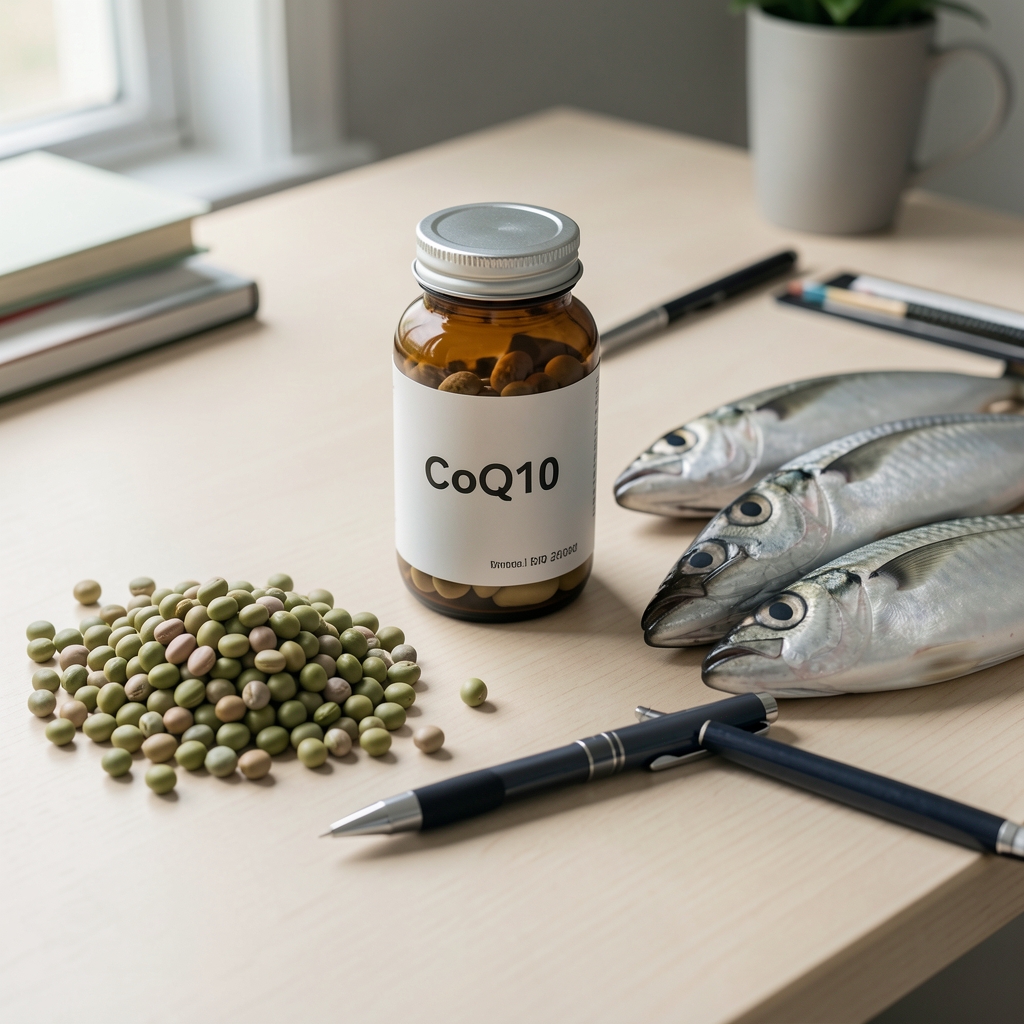
CoQ10 is often encountered as a short ingredient name on a shelf. The abbreviation feels technical, but the first useful questions are ordinary: what is the serving information, what else is present, and how does the choice sit beside meals and existing routines?
Understanding the abbreviation
CoQ10 refers to coenzyme Q10, a compound discussed in nutrition writing and found in small amounts in foods including fish, meat, and legumes. Product labels may use different formats and quantities. Clear comparisons require attention to the full panel rather than the front label alone.
That distinction matters for CoQ10 heart men searches, where a short phrase can carry many expectations. An editorial page can narrow the conversation to definitions, food sources, and questions worth taking to a qualified professional.
The label as a document
A label records serving size, ingredient amount, additional components, storage, and manufacturer information. Reading from top to bottom helps prevent one prominent number from dominating the decision. It also creates a repeatable habit for comparing products without relying on packaging tone.
Men's supplement routines vary with breakfast, office hours, exercise, and travel. A product that is easy to identify and store may be more practical than one with a crowded schedule. Practicality is not a promise; it is simply part of describing the routine honestly, alongside the ingredient itself.
Where CoQ10 sits in a weekly food pattern
Foods such as oily fish, organ meats, whole grains, and legumes contain naturally occurring CoQ10 in smaller amounts than most supplement servings provide. Recording which meals already include these foods can help a reader see how a supplement fits alongside, rather than replaces, an existing diet.